A specific experiment, with a specific boundary
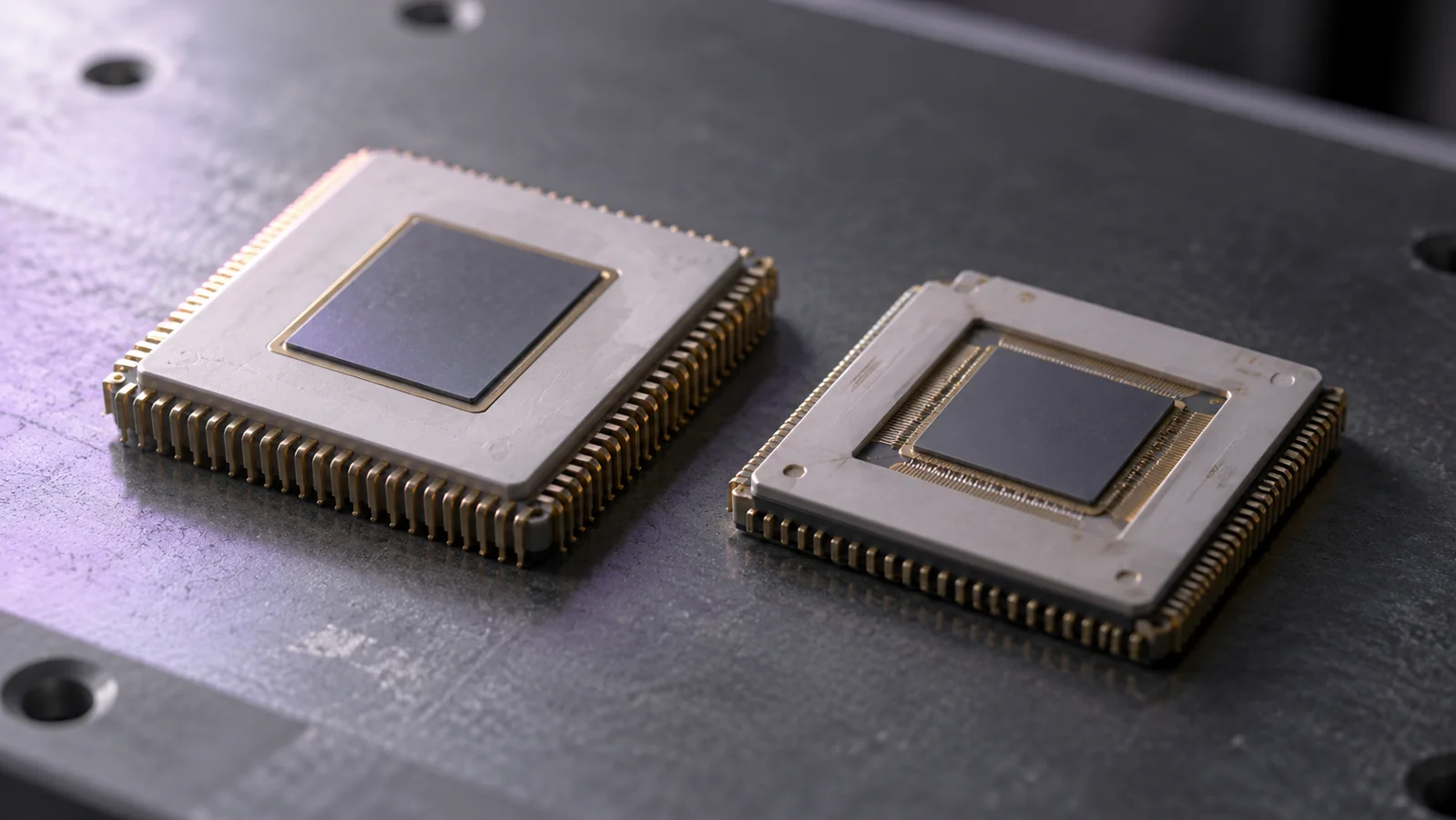
FINAL-Bench published an October 26 report saying it pretrained a 325.6-million-parameter language model on a commercial inference-oriented NPU. The authors report a matched GPU run and almost identical loss on an unseen text sample. They also state that the training implementation is not public and that the result is about feasibility rather than a speed record. Those qualifications belong beside the headline, not several scrolls below it.
That is an interesting research claim. It is not evidence that every computer advertised with an NPU can now train a useful personal assistant. A chip category is not a shared software interface, and a result on one stack does not establish support on another. Signal Scroll has not reproduced this experiment. The practical method below is our proposed way to read such a result and decide what evidence would justify a next step.
Start with three separate questions. Can the reported computation work at all? Can someone outside the team verify the released outcome? Can another team reproduce the process that produced it? A project can make progress on the first two while leaving the third unresolved. Treating those questions separately lets you appreciate an achievement without granting it claims it did not earn.
Source: FINAL-Bench: Pretraining a 325M Language Model from Zero on an Inference-Only NPU ↗ · FINAL-Bench: VKORE-325M-NPU-Base model card and released evaluation artifacts ↗ · Hugging Face: FineWeb-Edu dataset documentation ↗
Make a claim sheet before a comparison chart
For a useful reading session, open a blank document and write the narrowest version of the finding in one sentence. Include the workload, the hardware class, and what was measured. Avoid words such as revolutionary or replacement. If your sentence cannot fit without dropping the conditions, the conditions are probably doing important work.
Below that sentence, create four short paragraphs labeled demonstrated, reported, unavailable, and irrelevant to this decision. Demonstrated should mean evidence you can actually inspect, not something a presenter said confidently. Reported holds the authors' account of their procedure. Unavailable holds missing code, unreported costs, or measurements you would need. The final paragraph is for attractive facts that do not answer your question.
Imagine a student considering whether to investigate an accelerator for a class project. The student's decision could be whether to spend an afternoon reading the evaluation script. That requires less evidence than buying hardware or promising a client a delivery date. Your claim sheet should match the scale of your commitment.
A useful conclusion might therefore be: worth a reading group, insufficient for a procurement recommendation. That is a complete decision. You do not have to convert every research announcement into an immediate purchase, migration, or prediction about the entire industry.
A comparison is easier to interpret when the two sides share the things that could otherwise explain the result. For a proposed replication plan, list model architecture, starting weights, training data, optimizer settings, number of updates, evaluation inputs, and software versions. Then mark which entries are genuinely identical, merely similar, or unknown.
Consider an invented classroom example. Team A changes the accelerator and also doubles the training data. Team B changes the accelerator while keeping its data budget fixed. Even if both produce a better score, they answer different questions. The first result could be useful engineering, but it cannot isolate what the new chip contributed.
Now imagine two systems with similar average scores but different failures. One is consistent on short examples and weaker on long ones; the other has the opposite pattern. A single average would hide a choice that matters to a reader building a particular application. Ask what units were compared and whether results can be examined by input type.
Our interpretation is that matching reduces the space of possible explanations. It does not eliminate every source of variation or establish equivalence across every task. Write down what the comparison controls, then write down one plausible thing it does not control. That second sentence keeps a tidy chart from becoming a universal conclusion.
Read the evaluation artifact before trusting the adjective
The released VKORE model card and accompanying evaluation material give readers another artifact to inspect beyond the announcement. The model is presented as a base-model hardware experiment, not a polished instruction-following assistant. FineWeb-Edu, the cited training-data project, has its own dataset documentation; its name is a pointer to investigate, not a guarantee about every generated answer.
For a desk review, trace the path from data selection to final metric. Which file supplies the examples? How are examples selected? What quantity is averaged? Are both systems evaluated on the same inputs? Can you distinguish a development set used repeatedly during engineering from a final set reserved for evaluation?
You can do that review without downloading model weights. Read a small script in a browser and write a plain-language description of each stage. If a line is unclear, mark it unclear rather than asking a chatbot to invent its purpose. An AI assistant can propose questions about code, but your evidence is still the code and documentation you can inspect.
Do not treat fluent sample completions as a replacement for this review. A few appealing outputs can be useful illustrations while answering a different question from a controlled evaluation. Decide which question you are trying to answer before choosing which artifact deserves most of your attention.
An evidence ladder for a small team
Here is a proposed ladder for deciding how far to go. At the first level, save the announcement and identify its author and date. At the second, inspect the released artifacts and document what they can verify. At the third, run a bounded evaluation in an environment you understand. At the fourth, attempt an independent reproduction of the training procedure, if the necessary implementation and resources exist.
Each level should have its own exit condition. A reading group could finish level two by producing an annotated artifact list and three unanswered questions. A research team could finish level three by recording its environment, inputs, outputs, and deviations. Neither should quietly rename its work a full replication if it never repeated training.
Put a resource limit beside each level. For example, a hypothetical student group might allow one hour for reading and one lab session for inspecting released evaluation code. Those are planning examples, not measured requirements for this project. Real costs depend on the artifacts and environment.
If a missing implementation prevents the next step, stop at the boundary and publish a narrower conclusion. That is more useful than filling the gap with confidence. A limitation can be the result of your investigation: the outcome is partly inspectable, while the process remains outside your ability to reproduce.
A laptop specification, a laboratory accelerator report, and an application support matrix are three different documents. If your actual goal is running a local model, start with the application's documented supported devices and model formats. If your goal is training, check the training framework and exact backend. Do not infer either from an acronym on a product page.
A sensible requirement statement would name a task: classify a small set of your own public text examples, for instance. It would name a success condition, such as producing the required labels within your chosen time budget. It would also name a fallback, perhaps an ordinary CPU implementation that lets you check the logic before investigating acceleration.
Notice how little of that requirement depends on the most dramatic announcement. A project with an understandable baseline gives you somewhere to return if a specialized stack proves difficult. Without that baseline, every unexpected result becomes a mystery involving your data, code, model, and hardware at once.
For that reason, this story includes no hardware recommendation. The missing bridge between the reported experiment and a reader's specific machine is exactly what the investigation should establish. Buying a product would not fill that evidential gap, and a shopping link would make the distinction harder to see.
A no-purchase experiment in reading technical evidence
Try a comparison exercise with a friend. One person reads the announcement, and the other reads the released model documentation. Each writes five claims they believe the material supports. Then exchange lists and underline every word that goes beyond the evidence available in the document they read.
Pay special attention to can, faster, equivalent, open, and reproducible. Each hides a different burden of proof. Can needs a working case. Faster needs a defined comparison and measurement. Equivalent needs an explicit scope and tolerance. Open needs a named artifact and license. Reproducible needs enough procedural detail for someone else to repeat the relevant process.
Next, rewrite one overbroad claim. For example, change a hypothetical statement that a new accelerator replaces GPUs into a statement that a particular workload deserves further investigation under a named configuration. This is an editorial exercise, not a result from the VKORE evaluation.
The last step is a question you could send to a project maintainer after checking existing documentation: what missing artifact or measurement would most change our conclusion? Keep it specific. Asking for an exact environment manifest or a clearly defined timing measurement is easier to answer than asking whether the technology is the future.
Keep a short disagreement log during the exercise. Record the original wording, the evidence each reader used, and the narrower version you both accept. If you cannot agree, preserve the disagreement as an unresolved question. This makes the exercise useful later: you can revisit a precise uncertainty when new artifacts appear, instead of rereading the whole announcement and reconstructing why you were cautious.
The next useful result may look less dramatic
Suppose a follow-up publishes a complete environment specification but no better score. That could be valuable because it lowers the cost of checking the original result. Suppose another team reports the same outcome on one additional workload. That broadens the evidence in a specific direction. Neither needs a sweeping headline to matter.
Conversely, a bigger model or a more polished demo might leave your most important uncertainty untouched. If your concern is whether the process can be reproduced, another sample completion is not the missing artifact. If your concern is deployment support, a training-quality score is not a support matrix. Progress should be assessed against the question you wrote down at the beginning.
For readers who build things, the durable habit is to turn exciting hardware news into a small set of inspectable obligations. What was run? What stayed fixed? What was measured? What is released? What would a different team need to repeat the relevant part?
That habit travels well beyond NPUs. It helps when reading model compression claims, database benchmarks, accelerator ports, and optimization announcements. You can stay curious about an unexpected result while keeping your own decisions proportional to the evidence. The reward is a clearer next experiment, not merely a stronger opinion about a chip.
Try this, then make it yours.
Write a four-paragraph claim sheet for the VKORE report, then identify the single missing artifact that would most affect your next decision.
Explore the tool ↗Follow the signal.
Our reporting starts here. Practical suggestions are our analysis, and vendor performance statements are claims unless independently verified. We haven’t hands-on tested this release.
- FINAL-Bench: Pretraining a 325M Language Model from Zero on an Inference-Only NPU ↗ · 2026-10-26
- FINAL-Bench: VKORE-325M-NPU-Base model card and released evaluation artifacts ↗
- Hugging Face: FineWeb-Edu dataset documentation ↗