A poem is a useful engineering signal
On October 30, Google reported that its Project Suncatcher prototype had returned an AI response from orbit. The company says a prompt reached an onboard Gemma 4 model running on a data-center-class TPU, and the generated poem came back during a ground-station pass. Google describes thermal-stress and radiation testing as upcoming work, with interconnected satellites targeted as a later milestone. Those are company-reported results, not an independent assessment of the system.
The interesting part is the working path. A request went up, computation happened, and an answer came down. That gives the team something concrete to investigate beyond an animation of a possible future. It is also a much narrower result than proving that orbital AI can replace a terrestrial service. A response is evidence of an executed task; a dependable service needs evidence about many tasks across many conditions.
Here is our interpretation: the most useful way to follow this project is to ask what uncertainty each new demonstration removes. That approach lets you enjoy the engineering without turning every successful packet into a prediction about the entire AI industry. It also works for much smaller projects. Your first local model response, classroom sensor stream, or automated report has the same basic challenge: deciding what success actually authorizes you to claim.
The rest of this piece is a proposed reading and evaluation method. We have not tested Suncatcher, accessed its telemetry, or calculated its operating economics. The examples below are deliberately hypothetical. Their purpose is to help separate a promising milestone from the additional evidence needed for a deployment decision.
Source: Google: First response from the Project Suncatcher prototype satellite ↗ · NASA: Thermal Vacuum testing facilities and purposes ↗
Put the claim on an evidence ladder
Start with five questions, each narrower than a grand story about the future. Did the hardware respond? Did the intended software run? Did the output meet a defined task requirement? Did that happen repeatedly under relevant conditions? Could the whole system deliver useful work within practical limits? An announcement may answer the first two while leaving the others open.
Imagine a proposed orbital service that labels a set of non-sensitive scientific images. Receiving a valid label once would be meaningful. It would not establish the error rate across the complete image collection. Processing one batch would not establish the time required to get all the inputs to the system. Running for one contact window would not establish the behavior over a longer operating period.
Give each question its own evidence slot. Record the exact statement, who made it, the test conditions disclosed, and what remains unavailable. A blank slot is informative. It stops an attractive narrative from silently supplying a measurement that nobody has published. You can write “not reported in this update” without implying that the project team has never measured it.
This is especially useful when reading a milestone out of order. A future update might report a longer workload but still omit the amount of data transferred. Another might report successful communication between two devices but say little about application quality. These would be different advances. Treating them as separate removes the pressure to decide whether every announcement is either revolutionary or meaningless.
For your own project, put the proposed user benefit at the top of the page. Then work backward to the smallest observation that would justify it. If the benefit is receiving a useful answer before a deadline, a screenshot of one answer is a starting artifact, not the final acceptance test.
Keep computation and delivery in separate columns
A model can finish its work while the user is still waiting for the result. Our suggested evaluation sheet therefore has a computation column and a delivery column. The first describes what ran and how its output was checked. The second describes when inputs arrived, when outputs became available to the recipient, and what happened when a transfer did not complete.
Use a simple hypothetical example. A lab has a hundred small files to analyze before its afternoon review. The model might process each file quickly, yet the complete job might remain unfinished because the last files have not arrived or the final results have not been retrieved. Conversely, a slower model could still meet the lab’s deadline if the files were already available where it runs.
Neither example is a prediction about Google’s hardware or network. It is a reminder to match the measurement to the actual workflow. If the public record only establishes onboard generation, keep that label. Do not convert it into a claim about consumer response time, bulk scientific processing, or continuous availability without the relevant observations.
A useful report would identify the complete job boundary: preparation, transfer, queuing, execution, validation, and delivery. You do not need to know the engineering details of every stage to ask whether a headline measures the whole path or a single segment. That distinction is often more revealing than a single impressive speed number.
Try the same separation with a familiar AI tool. Note when you submit a document, when the model finishes, and when you receive something you can actually use. If the result needs manual repair, include that work in a separate acceptance column. The exercise trains you to recognize system claims wherever the system happens to be located.
Environmental testing is its own question
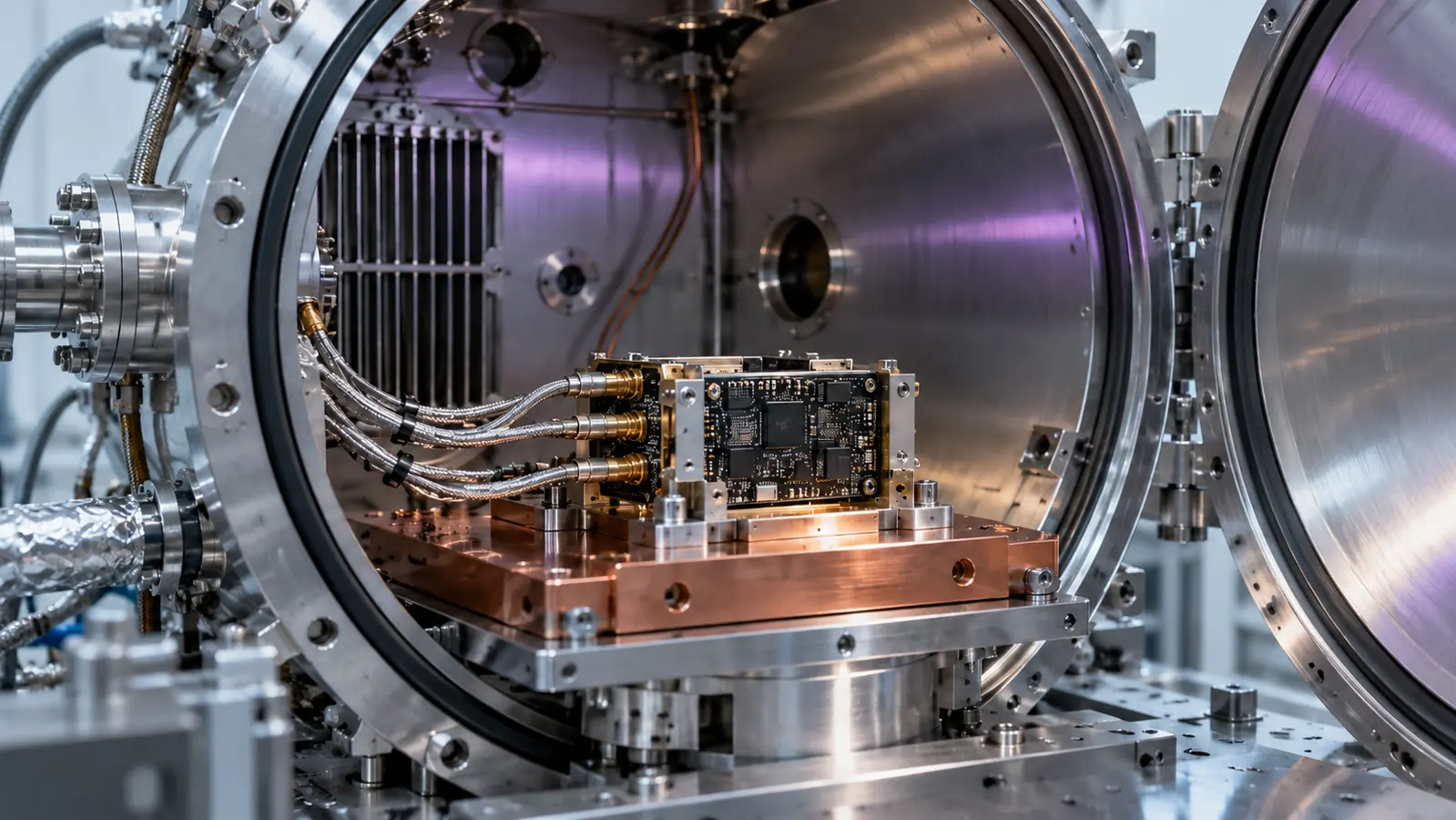
NASA’s thermal-vacuum facilities documentation describes testing spacecraft hardware and components under controlled space-like conditions. It lists development, evaluation, qualification, and environmental cycling among the uses. The source matters here because it shows that environmental behavior is a separate engineering discipline. It does not certify Google’s project or reveal the prototype’s specific design.
For a reader, the useful next step is to ask what operating conditions a result represents. Was the task short or sustained? Were conditions stable or changing? Did the report include interruptions, recovery, or degraded behavior? These questions are more precise than asking whether a chip simply “works in space.”
Suppose a fictional test program repeats one approved workload across several operating intervals. Its report could record successful completion, rejected outputs, restarts, and missing observations separately. That would allow a reader to distinguish a graceful stop from an unexplained disappearance. A clean success count alone might conceal that distinction.
You should also resist supplying universal thresholds. There is no single temperature, duration, or retry count we can invent here that would qualify an orbital AI platform. Appropriate limits depend on the hardware, mission, and intended use. The practical method is to look for stated requirements and evidence against those requirements, rather than borrowing numbers from a different spacecraft.
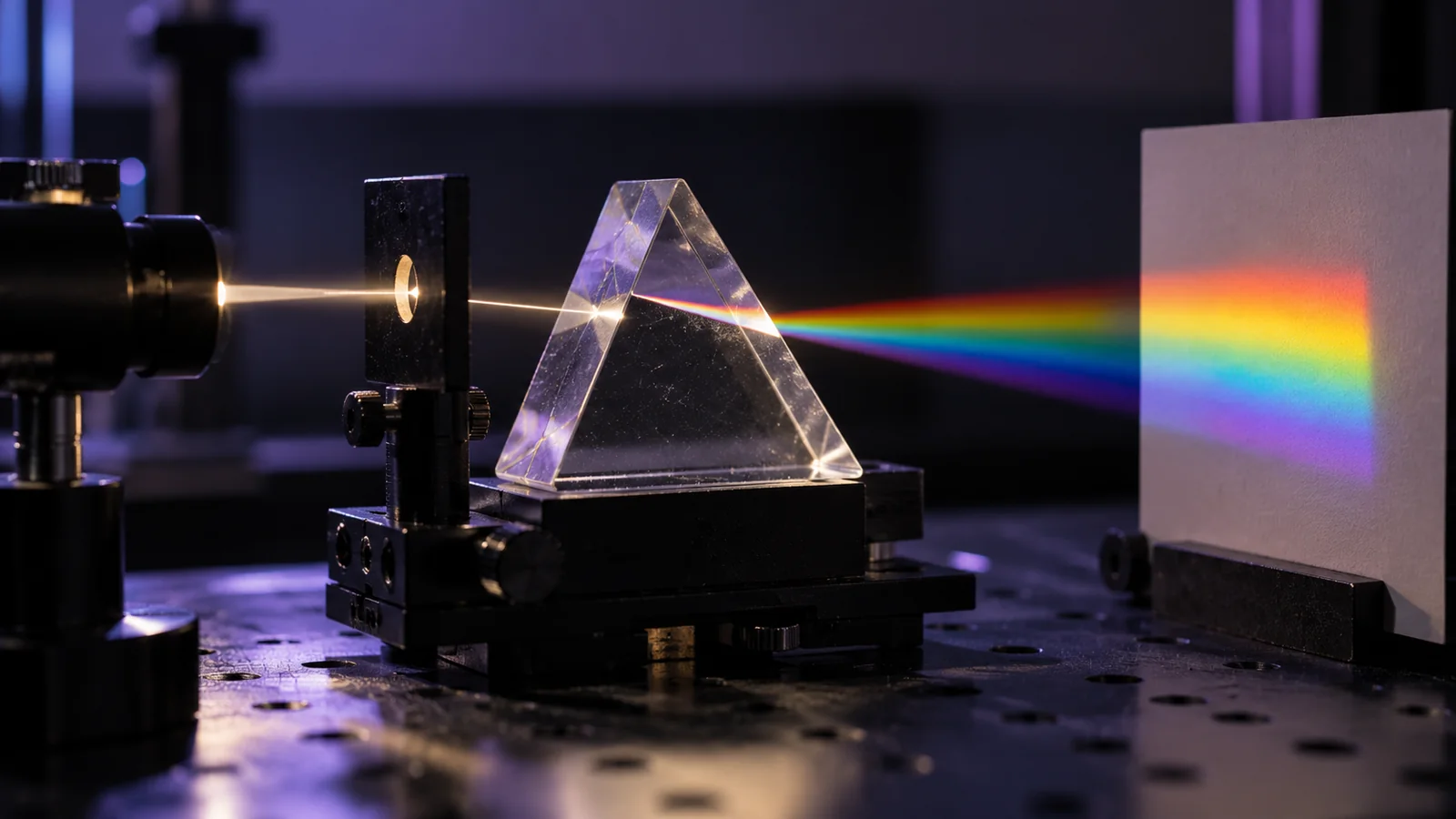
This is a good place to separate a conceptual cover image from evidence as well. A picture of laboratory equipment can illustrate the topic; it cannot tell you which tests the announced system passed. Our cover is an AI-generated editorial illustration. The factual record comes from the linked sources, not the apparent realism of the image.
Make the comparison fair before discussing efficiency
A deployment comparison needs the same useful task on both sides. If one system produces a short demonstration response and another processes a demanding real dataset, comparing their headline resource figures would answer very little. Define a common output requirement first, including the quality check and the deadline.
For the hypothetical image-labeling lab, that might mean a fixed collection, an agreed label vocabulary, and a review process for uncertain cases. Then specify whether setup, transfer, retries, and rejected results count. These are proposed accounting choices, not measurements of Suncatcher. Their value is that another person can inspect the comparison before seeing a winner.
Environmental or economic claims require an especially explicit boundary. Ask what is counted, over what period, and per which accepted unit of work. A claim about one component is not automatically a claim about the complete system. A forecast based on a future design should stay labeled as a forecast, even if the early hardware demonstration succeeded.
Do not demand a complete commercial case from every research update. A research prototype can be worthwhile precisely because it helps discover whether a larger idea is feasible. The fair response is to acknowledge the demonstrated step while reserving judgment on questions the experiment was not designed to answer.
For a student, creator, or small team, this habit prevents expensive imitation. You can be interested in an unusual compute platform without deciding you need to build around it. Make an evidence note now. Revisit it when later results answer a question relevant to your own work. Curiosity and commitment do not need to happen at the same moment.
Build a milestone notebook in twenty minutes
Choose one public claim from the announcement and restate it without promotional adjectives. For example: the company reports receiving a model-generated response from its prototype satellite. Beneath that statement, write the evidence you can inspect, the conditions disclosed, and the information you cannot inspect. Keep the source date visible so a later update does not erase what was known at the time.
Next, write three possible future observations that would change your view. These should be questions rather than demands for a preferred outcome. You might ask for repeated task completion, a clearer description of delivered workload, or results from the next environmental testing phase. Avoid guessing what those future observations will show.
Then create a small analogy you can actually examine. Use a local or already available AI tool with a harmless task and a fixed output requirement. Repeat the task a few times while recording completion, correctness, and time to a usable result. This does not reproduce orbital engineering. It demonstrates why “responded once” and “works reliably for my task” are different statements.
Write down a failure before you run the exercise. Perhaps an answer arrives after your deadline, omits a required item, or cannot be opened. Keeping that definition fixed makes the result easier to interpret. If you revise the task halfway through, preserve the earlier version instead of quietly moving the goalposts.
End with a two-sentence note you would be comfortable sharing. One sentence should say what the evidence supports. The other should name the most decision-relevant uncertainty. That is enough for a useful discussion. You do not need to predict the winner of a future infrastructure market to explain a present engineering milestone.
What would make the next update useful?
For this project, watch for information that connects the successful response to a broader operating envelope: what work ran, how often it completed, which conditions were represented, and how outputs were validated. Those are questions to bring to future reporting, not a suggestion that the answers are already public.
Also watch the language used around planned milestones. A target for a future interconnected system is a plan until a later source documents its execution. Preserving that distinction makes your notebook age better. When the next announcement arrives, you can add evidence without rewriting an earlier promise as an earlier accomplishment.
A useful AI news habit is to let a result be the size it actually is. The orbital response is interesting because a real technical path reportedly worked. Its importance does not depend on pretending that reliability, economics, environmental impact, and scale have all been settled by the same event. Following the unanswered questions is part of following the science.
Try this, then make it yours.
Make a one-page milestone note with a dated claim, its inspectable evidence, three open questions, and the next observation that would change your decision.
Follow the signal.
Our reporting starts here. Practical suggestions are our analysis, and vendor performance statements are claims unless independently verified. We haven’t hands-on tested this release.
- Google: First response from the Project Suncatcher prototype satellite ↗ · 2026-10-30
- NASA: Thermal Vacuum testing facilities and purposes ↗